
How Can a Family Law Attorney Help With Post-Divorce Modifications in Florida?
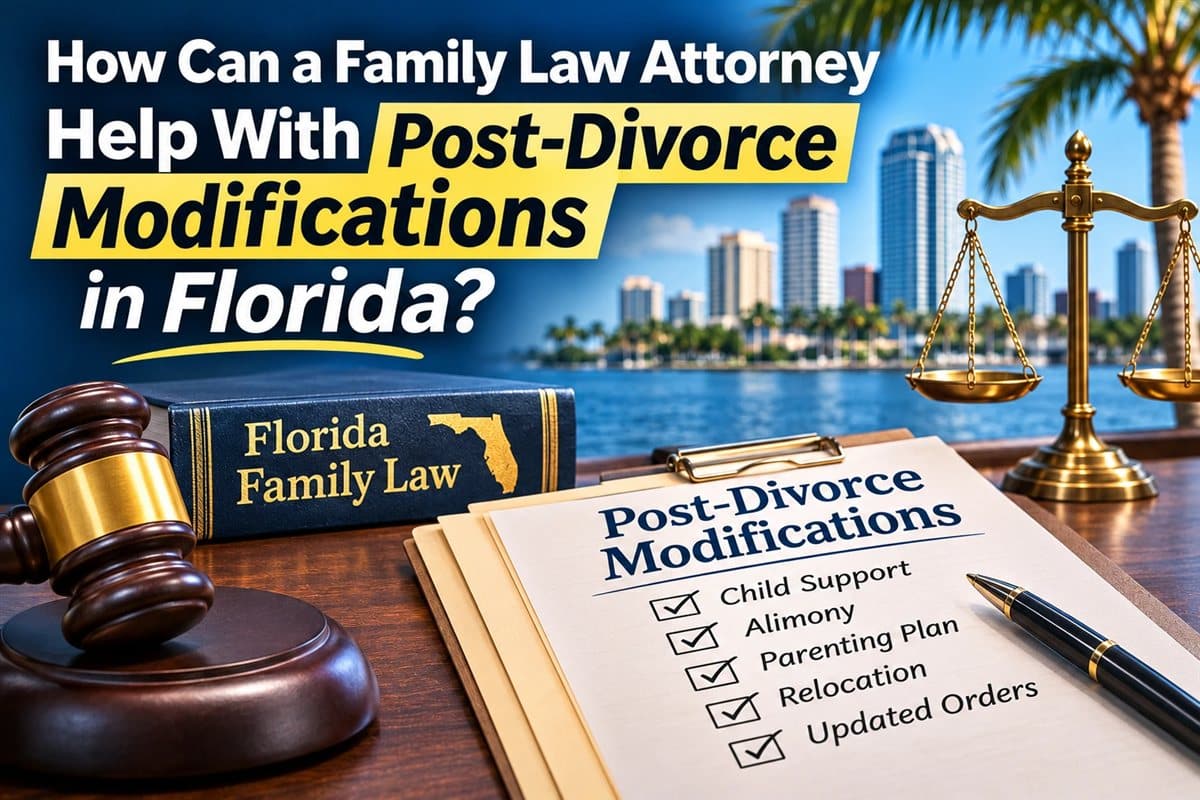
Divorce orders aim to bring stability, but in most cases, life doesn’t stay the same. Income may change; children may be older; and other circumstances may shift. That is when post-divorce modifications help to bring stability into someone’s life. When dealing with post-divorce issues in Florida, an experienced family law attorney helps individuals review their court orders and adapt to the new realities of their lives.
Filing a petition is only half the job; the rest involves proving that certain standards have been met and avoiding informal solutions that could complicate matters later.
Why Court Orders Sometimes Need Updates
When A Divorce Order Stops Working
The final order does not necessarily mark the conclusion of all matters relating to family law. It sets the parameters at the time, based on the financial circumstances, parenting requirements, and living situation at the time of the divorce. All of these circumstances could have changed significantly several months or even years down the road.
One parent might move for career reasons. The children’s education or health care needs might increase. One party might become unemployed or receive a substantial salary increase. The person might remarry or encounter serious health problems. If these changes affect either the support or the timesharing arrangement, adjustments may be necessary.
When Changed Circumstances Become Legal Issues
The central question in most post-divorce modification cases is not whether life has changed, but whether it has changed enough under Florida law to support a formal revision. Courts generally look for a substantial, material, and unanticipated change in circumstances. That is a legal threshold, not just a personal frustration.
This is where early legal guidance matters. Many people believe a court will update an order simply because the existing arrangement feels inconvenient or outdated. That is not usually enough. A Tampa family law firm can help frame the issue in terms of evidence, timing, and legal standards rather than emotion alone, which often makes the difference between a weak request and a persuasive one.
Support Orders Must Reflect Reality
Modifications to post-divorce agreements due to changes in financial circumstances are one of the most common cases. Both child support and alimony payments can be adjusted depending on whether the person’s income has increased or decreased. In cases of layoffs, disability, or reduced business revenues, a parent may be unable to pay the original amount. Conversely, a person receiving payments might claim they now earn more than before the divorce.
In such cases, lawyers need to focus on concrete financial evidence rather than mere statements. Pay stubs, tax documents, business statements, medical reports, and employment background checks are all needed. Finally, lawyers advise clients against a common blunder: waiting until debts grow while relying on the previous agreement.
Parenting Plans Can Outgrow Old Terms
Parenting agreements often need amending because life doesn’t stay the same for kids. What suited a four-year-old may not suit a teen, especially regarding school and after-school activities, or even his social life. There may also be additional transportation issues. For example, one parent might now need to travel for work or work late hours. Consult a family lawyer to determine whether the issue stems from a lack of coordination or a valid ground for revising the agreement.
When filing for a modification, the court is more likely to consider the case when strong grounds and concrete facts support the request. For instance, the parent may fail to observe the pickup time or disrupt the kid’s education.
Relocation Changes More Than Addresses
One reason a divorce can become complicated is disagreement over moving. Relocating could affect how the child receives their education, how the family travels, how they celebrate holidays, and how parent-child relationships are established after the divorce. Sometimes a parent recognizes the need to relocate, but the legal implications can be very serious.
The first thing an attorney must do is help their client determine whether they need approval for the relocation. More importantly, the attorney can base the case on facts rather than assumptions. Courts consider distance, intentions, the feasibility of new arrangements, and how these will affect the child.
Informal Agreements Create Avoidable Risk
Ex-spouses might try to manage changes outside the law, particularly if the marriage remained friendly. They may increase or decrease support payments, switch custody days, or suspend their duties based on their mutual understanding. This approach may seem logical; however, it can become a serious issue if a disagreement arises.
In such a situation, the lawyer will facilitate the process of legalizing any changes through the court’s approval. Both parties will benefit from that. The obligor will not face allegations of a violation, even if they agree to certain concessions. The obligee can obtain clarification on the agreed conditions and the period of validity. If the divorce involves children, formalizing the process provides additional clarity for organizing education, travel, and decision-making.
Evidence Often Decides The Outcome
Cases dealing with modification after divorce are generally hard to win based on general stories alone. Judges want facts and figures to back your claims. When did the problem arise? Was it expected when the order was made? How does the situation affect the child, money, and compliance with the judgment? What evidence can prove it?
This is where a lawyer who specializes in family law can help you out with your case. This will mean collecting work papers, school papers, hospital records, phone logs, travel plans, and witness statements. This might also entail pointing out your flaws before the opposing party even tries to prove it. If you claim you’re having financial difficulties but your latest expenses don’t reflect that, you need to fix that before anything else.
Stability Requires More Than A Final Order
The purpose of post-judgment modifications cannot be considered to nullify the judgment simply because it is convenient to do so. These modifications are intended to ensure that any order issued accounts for the new circumstances created by a drastic change. For example, in Florida, it is not enough to petition for relief; you must prove a change in circumstances and how it affects the case.
With a family law attorney, what could otherwise be a chaotic personal situation becomes a clear and precise legal matter. This applies whether the concern involves alimony, child custody, moving, or contempt.

About the Author
Fred Campos is a father, custody advocate, and host of the Daddy Got Custody podcast. He shares practical parenting and child custody tips to help parents navigate family court with confidence.
Join Our Newsletter

What Evidence Actually Wins Child Custody Cases?
One of the biggest misconceptions fathers have is believing that simply being a good dad will be enough to win in family court. Unfortunately, that's not how the legal system works. Judges don't decide custody based on who tells the best story. They decide based on...

The 10 Biggest Mistakes Fathers Make During a Custody Battle
Every year, thousands of good fathers lose valuable parenting time—not because they don't love their children, but because they unknowingly make mistakes that hurt their custody case. I've spent more than 27 years helping fathers navigate child custody cases, and I've...

Can a Father Win Custody Without Hiring an Attorney?
Every Father Asks This QuestionOne of the first questions fathers ask me is:"Can I do this myself?"After helping fathers through custody cases for more than 27 years, my answer is always the same.Yes... but I hope you don't.Can a father represent himself in family...

Why Good Dads Lose Custody for Preventable Reasons | Daddy Got Custody
Why Good Dads Lose Custody for Preventable Reasons One of the hardest truths in family court is this:Some fathers lose custody not because they are bad dads, but because they make avoidable mistakes. They love their children.They care deeply.They want to do the right...

What Fathers Should Never Say in Court | Daddy Got Custody
What Fathers Should Never Say in Court If you are a father preparing for family court, one of the biggest mistakes you can make is assuming the judge only cares about your facts. Facts matter. Evidence matters. Documentation matters.But so do your words. In a custody...

What Do Wisconsin Child Support Lawyers Actually Do for Parents?
Child support cases can become stressful when you are dealing with divorce, court deadlines, financial pressure, and major changes inside your home. You may already know that a child support lawyer helps with payments and paperwork, but their role usually goes further...