
What Evidence Actually Wins Child Custody Cases?

One of the biggest misconceptions fathers have is believing that simply being a good dad will be enough to win in family court.
Unfortunately, that’s not how the legal system works.
Judges don’t decide custody based on who tells the best story. They decide based on evidence.
After helping fathers for more than 27 years, I’ve seen countless cases where loving fathers struggled—not because they lacked commitment, but because they couldn’t prove it.
The encouraging news is that building strong evidence isn’t complicated. It starts with developing good habits long before you walk into a courtroom.
Here are the types of evidence that can make a meaningful difference in your custody case.
1. A Detailed Parenting Time Log
One of the most valuable pieces of evidence is a simple parenting journal.
Record things like:
- Pick-up and drop-off times
- Overnight visits
- School activities
- Doctor appointments
- Sporting events
- Meals you prepared
- Homework sessions
- Weekend outings
You don’t need to write a novel.
A few factual sentences each day can become an incredibly powerful record over the course of several months.
Think of your parenting log as a diary of your involvement—not your frustrations.
2. Photographs That Tell a Story
Photos can provide visual evidence of your involvement in your child’s life.
Don’t focus on posed portraits.
Capture everyday moments such as:
- Cooking dinner together
- Reading bedtime stories
- Helping with homework
- Working on school projects
- Playing at the park
- Visiting the zoo
- Attending birthday parties
- Family vacations
- Church activities
- School events
The goal isn’t to create social media content.
It’s to document the life you’re building with your child.
3. School Records
Teachers often become some of the most credible witnesses in custody cases.
Stay involved by:
- Attending parent-teacher conferences
- Volunteering at school
- Communicating respectfully with teachers
- Reviewing report cards
- Helping with homework
- Participating in school events
Keep copies of emails, newsletters, certificates, and report cards.
These records demonstrate that you’re actively engaged in your child’s education.
4. Medical Records
Healthcare involvement shows responsibility.
Whenever possible, attend:
- Doctor appointments
- Dental visits
- Eye exams
- Counseling sessions
- Therapy appointments
Know your child’s:
- Pediatrician
- Allergies
- Medications
- Medical history
Being informed about your child’s health demonstrates active parenting.
5. Communication Records
Save important communication.
Examples include:
- Text messages
- Emails
- Messages through parenting apps
- School notifications
- Medical correspondence
Never alter conversations.
Never delete messages because they seem unimportant.
Sometimes a simple exchange showing cooperation becomes valuable evidence months later.
Always communicate as though a judge may someday read every word.
6. Witnesses Who Know Your Parenting
The strongest witnesses are often neutral third parties.
Examples include:
- Teachers
- Coaches
- Daycare providers
- Counselors
- Religious leaders
- Neighbors
- Family friends
These individuals can often describe your parenting far more objectively than relatives.
Their observations may carry significant weight because they have little personal interest in the outcome.
7. Financial Responsibility
Providing financial support demonstrates commitment.
Maintain records of expenses including:
- Clothing
- School supplies
- Sports fees
- Medical bills
- Insurance
- Childcare
- Birthday gifts
- Holiday expenses
Save receipts whenever practical.
While money alone won’t win custody, responsible financial support reflects stability.
8. A Daily Parenting Journal
This deserves its own section because it can become one of your strongest tools.
Your journal should include:
- Dates
- Times
- Activities
- Conversations
- Concerns
- Milestones
- Missed visitations
- Positive parenting moments
Avoid emotional commentary.
Instead of writing:
“She was impossible today.”
Write:
“Exchange scheduled for 6:00 PM. Arrival occurred at 6:42 PM.”
Facts carry far more weight than opinions.
9. Your Online Presence
Today, your social media accounts often become part of your evidence.
Avoid posting:
- Angry comments
- Insults
- Party photos
- Illegal behavior
- Discussions about your custody case
Instead, use good judgment.
If you wouldn’t want the judge to see it, don’t post it.
Remember that even deleted content may still exist through screenshots or archived records.
10. Consistency Is the Best Evidence
Here’s something I’ve learned after nearly three decades of helping fathers:
Judges are less impressed by grand gestures than by consistent parenting.
One amazing weekend won’t outweigh months of absence.
But hundreds of small moments—homework, bedtime stories, doctor visits, soccer games, family dinners, school pickups—create a compelling picture of the father you are every single day.
Consistency builds credibility.
And credibility builds trust.
What Doesn’t Help Your Custody Case
Many fathers spend valuable time collecting information that has little impact.
Examples include:
- Long social media arguments
- Character attacks against the other parent
- Rumors
- Hearsay
- Emotional outbursts
- Opinions without documentation
Family court generally focuses on one central question:
What arrangement is in the child’s best interests?
Everything you document should help answer that question.
Start Building Your Evidence Today
You don’t have to wait until a lawsuit is filed to begin documenting your involvement.
In fact, the best evidence is created naturally over time.
- Take photos.
- Keep a parenting journal.
- Attend school events.
- Know your child’s teachers.
- Volunteer when possible.
- Be present.
- Show up consistently.
Those everyday actions not only strengthen your custody case—they strengthen your relationship with your child.
Final Thoughts
One phrase has guided much of my work over the past 27 years:
Family Court rewards preparation.
The fathers who achieve the best outcomes are rarely the loudest or the most emotional.
They’re the ones who quietly build a record of love, responsibility, and consistency.
Remember:
Good fathers deserve meaningful time with their children. Fathers who can clearly demonstrate their involvement give the court the confidence to protect that relationship.
If you’re preparing for a custody case, start documenting today. Months from now, you’ll be thankful you did.
Need More Help?
Daddy Got Custody has been helping fathers understand the realities of child custody for more than 27 years.
Explore our growing collection of articles, podcast episodes, and practical resources designed to help you become the strongest parent—and the strongest advocate—for your children.

About the Author
Fred Campos is a father, custody advocate, and host of the Daddy Got Custody podcast. He shares practical parenting and child custody tips to help parents navigate family court with confidence.
Join Our Newsletter

Why Does Child Custody in Texas Matter When One Parent Wants to Relocate?
When one parent wants to relocate, the issue often reaches far beyond a change of address. A move can affect school schedules, weekday parenting time, travel costs, communication patterns, and the child's sense of routine. What looked manageable when both parents...
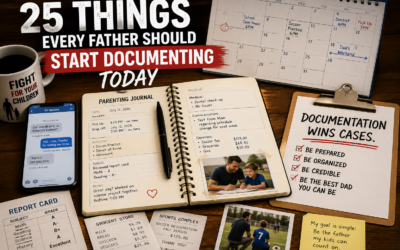
25 Things Every Father Should Start Documenting Today
The Best Memory Doesn't Win in Court One of the biggest mistakes fathers make is assuming they'll remember everything when it's time to testify. You won't. Custody cases often take months—or even years—to resolve. By then, the details blur together. Dates get...

What Judges Look for When Deciding Child Custody
It's Not About Who Loves Their Child More One of the biggest misconceptions fathers have is believing custody cases are won by proving who loves their child the most. The truth is… Almost every parent who walks into family court loves their child. Judges already...

How to Choose the Right Family Law Attorney for Your Custody Case
Not All Family Law Attorneys Are the Same One of the biggest mistakes I see fathers make is assuming that every family law attorney has the same experience, skills, and approach. They don't. After spending more than 27 years helping fathers through custody disputes,...

How Judges Decide Child Custody: What Every Father Should Know
Every year, thousands of good fathers lose valuable parenting time—not because they don't love their children, but because they unknowingly make mistakes that hurt their custody case. I've spent more than 27 years helping fathers navigate child custody cases, and I've...

27 Years of Custody Cases: 10 Lessons Every Father Should Know
More than twenty-seven years ago, I began helping fathers who were scared, overwhelmed, and unsure of what to do next. Since then, I've spoken with thousands of dads. Some walked away with equal parenting time. Some earned primary custody. Others lost valuable time...