
What Actually Delays a Florida Divorce: Fixing Filing, Service, and Disclosure Errors
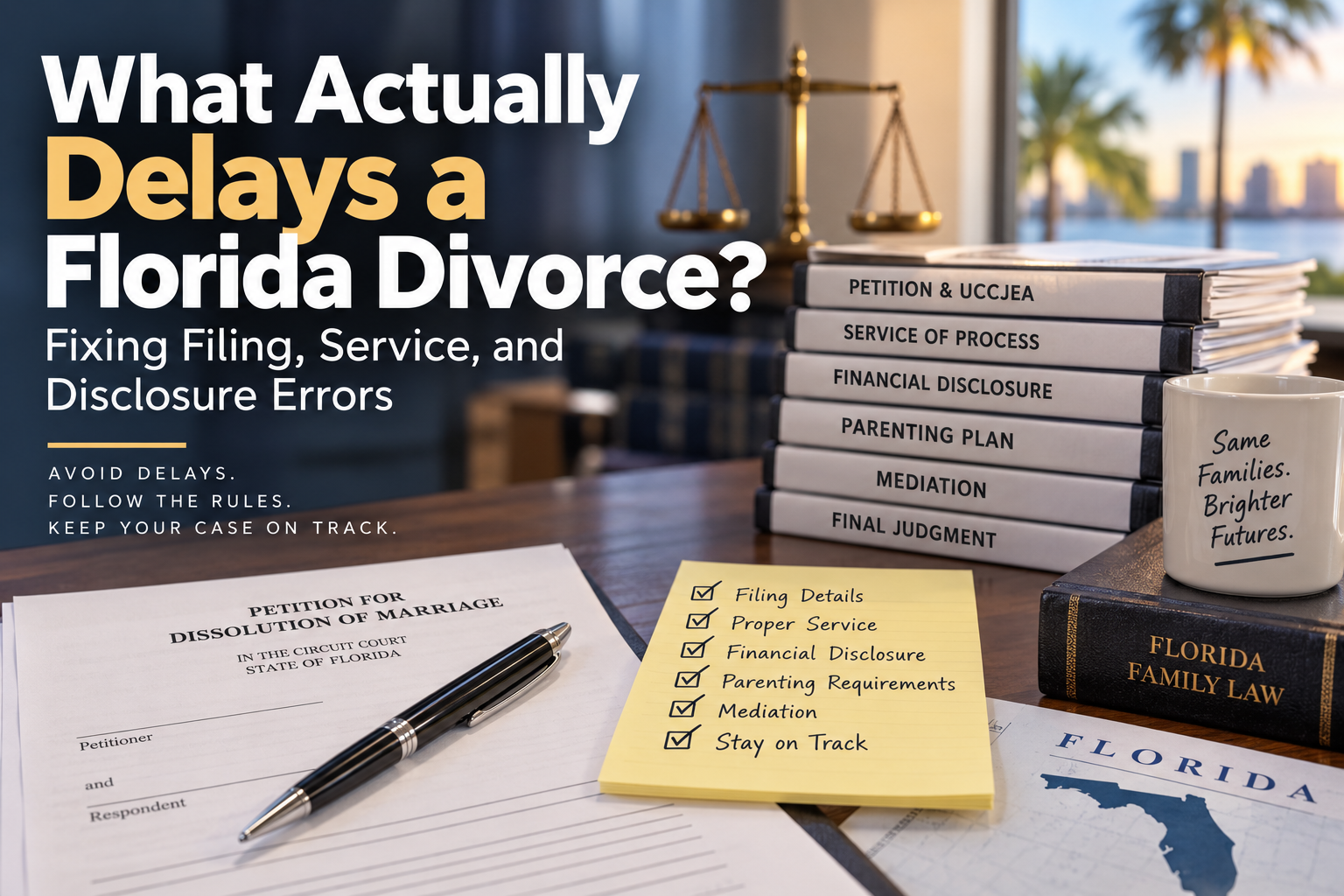
Florida’s no-fault divorce system aims to simplify cases, but many dissolutions get mired in avoidable procedural pitfalls. Small gaps in the original petition, mistakes in serving the other spouse, or missed disclosure deadlines can turn a simple case into months of extra hearings and cost. This article discusses common bottlenecks that can slow Florida divorces and how to avoid them. You will learn how details such as the UCCJEA affidavit, financial affidavit, and parenting course certificate interact with rules on service of process, mandatory disclosure, and mediation so you can maintain momentum from filing through final judgment.
If you need a refresher on Florida’s big-picture requirements, resources from Kalish & Jaggars, PLLC can help you get oriented. We’re going beyond the basics to cover where cases bog down and what to file, serve, or fix to keep your timeline on track.
Gaps in the Petition, UCCJEA, and Venue Details
Clerks and judges will first look for a properly verified Petition for Dissolution of Marriage, proper venue, and proof of residency. Common stalls include failing to sign the verification page before a notary, failing to substantiate the six-month Florida residency allegation, or listing the wrong county on the petition. If other custody cases involve minors, the affidavit must include the addresses of all minor children for the past five years. Leaving these lines blank or guessing at dates can result in a deficiency notice or a continuance at case management.
Two small filings can prevent early friction in many cases: a Notice of Social Security Number to identify accounts for support calculations and any local Standing Family Law Order acknowledgment required by many circuits upon filing. Match each name to a photo ID before you e-file, and double-check prior names or aliases used on deeds or accounts. Attach exhibits referenced in the petition, such as a prenuptial agreement. This lowers the chances of rejection and eliminates the need to amend, which resets schedules and frustrates negotiations.
Service of Process Choices, Waivers, and the Answer Deadline
Even perfect petitions go nowhere if the respondent is not properly served. In Florida, the sheriff, a certified process server, or acceptance and waiver can serve the papers when a cooperative spouse signs before a notary. Each path has trade-offs: traditional service starts the 20-day clock to answer and keeps pressure on the case. A waiver saves fees but may give an unrepresented spouse time to guess a near settlement second. If your spouse lives outside your state, work with a process server in that state and closely monitor proof of service so the court recognizes jurisdiction and your deadlines.
Constructive service by publication is a last resort when diligent search fails to locate a spouse. It can dissolve the marriage, but without personal service, the court is limited in entering money judgments for alimony, child support, or equitable distribution. Often, the petitioner files to proceed, but then discovers that the court cannot split a retirement account or order support until the other spouse has been personally served. Consider hiring a skip tracer early, cross-checking old addresses against bank or DMV records, and timing settlement discussions around the answer deadline so you don’t lose momentum.
Mandatory Financial Disclosure: 45 Days That Make or Break Momentum
Florida’s mandatory disclosure rules require each party to exchange core documents and serve a financial affidavit within 45 days of service. If a party files the wrong version of an affidavit, fails to file bank and credit card statements, or redacts transaction details so balances cannot be verified, the process grinds to a halt. A clean packet typically includes recent pay stubs, the latest tax return, statements from checking, savings, retirement, and brokerage accounts, and documents showing debts such as mortgages or auto loans. Serve a Certificate of Compliance so the court and mediator can see disclosure is complete.
There are two common pitfalls. The first is that parties choose the short or long financial affidavit based on income, but forget to update it when bonuses or hours change, making child support calculations unreliable. Secondly, PDFs arrive with missing pages or truncated account numbers that don’t match the affidavit. Reconcile affidavit totals to statements before mediation. Label each account the same on all forms. Prepare an equitable distribution worksheet listing assets, debts, and proposed valuations. These steps move from arguments about what there is to get to arguments about how to divide it.
Child-Related Filings: Parenting Class, Guidelines Worksheet, and a Realistic Parenting Plan
Judges look for a proposed Parenting Plan, a child support guidelines worksheet, and proof that both parents completed the required parenting course early if children are involved. Cases get stuck when a plan says only “as agreed, doesn’t specify a meeting place, or doesn’t account for travel time between homes. A workable plan is overnight contact, midweek contact, holiday rotations, and pickup logistics based on school calendars. If one parent works rotating night shifts, suggest a 2-week repeating time-sharing schedule that matches those shifts. Add a transportation clause to cover early handoffs.
The child support worksheet is based on the accurate gross income, health insurance premiums, and daycare costs. Delays happen if a party guesses these figures or fails to attach documentation from the insurer or childcare provider. File a UCCJEA affidavit with complete school and caregiver information. Update worksheet when payroll or insurance changes. A realistic schedule, verified costs, and a plan for school breaks going into mediation increase the likelihood of a same-day partial agreement that the court can adopt at a short hearing.
Temporary Relief and Mediation: Balancing Speed With Leverage
You may need temporary orders for time-sharing, child support, or exclusive use of the home. The mistake is waiting months for a final hearing while bills pile up or racing to court without affidavits to support temporary needs. A narrowly tailored Motion for Temporary Relief can stabilize the case, with a recent financial affidavit and supporting exhibits such as mortgage statements and childcare invoices. Ask the judicial assistant about local rules, such as a Uniform Motion Calendar or special set hearing, so you allow enough time and comply with notice requirements.
In many circuits, mediation is required before trial, but timing affects leverage. If the parties exchange key documents, early mediation can save discovery costs. Sessions held too early become expensive meet-and-greets. One practical approach is to complete mandatory disclosures, exchange a draft equitable distribution worksheet, and issue narrowly focused subpoenas for missing retirement or payroll records, and then mediate if major assets require formal discovery or depositions; set deadlines so mediation happens with numbers both sides can defend.
In Florida, divorces are often stalled for predictable reasons: incomplete filings, shaky service, thin disclosures, and child-related gaps that prevent judges from entering orders. Double-check your petition and UCCJEA affidavit, use reliable process servers or notarized waivers, exchange full statements that match your financial affidavit, and come to mediation with a Parenting Plan and support worksheet based on actual schedules and costs. Addressing these details early does more than keep the docket moving. It limits disputes to those that actually require adjudication and puts a lasting final judgment within reach.

About the Author
Fred Campos is a father, custody advocate, and host of the Daddy Got Custody podcast. He shares practical parenting and child custody tips to help parents navigate family court with confidence.
Join Our Newsletter

How Legal Services Protect Your Rights in Court
California residents navigating the court system often face complex legal challenges that can significantly impact their rights and future. Legal services play a critical role in protecting individuals throughout every stage of a case, from preparing evidence and...

When to Involve a Lawyer in a Divorce Case
Divorce is often one of life’s most challenging experiences, bringing emotional and financial upheaval. Knowing when to involve a lawyer can make the process less stressful and ensure decisions are made carefully. Many situations, such as disputes over finances, child...

What Types of Cases Does a Family Lawyer Handle?
In New Haven, Connecticut, family law encompasses a broad spectrum of legal matters that directly impact individuals and families. According to the Connecticut Judicial Branch, in 2024, the New Haven Judicial District reported 2,971 new family cases, highlighting the...

Tips for Dealing with a Struggling Marriage
Being married is something to be proud of, but also requires a lot of work. Not all days will be good, and you may go through tough situations together. Over time, there may be a strain on your marriage, and you may not be getting along as well as you did previously....

Tips To Create a Kid Friendly Wedding
Are you planning a wedding over the next few months? Are you considering remarrying with kids? This is a stressful time for anyone, let alone people who have small children in their families who are going to be attending the event. Of course, this adds a layer of...

Menstruation While Breastfeeding: What’s Normal and What to Expect
Menstruation while breastfeeding is different for every mom—it may return in months or take over a year. This article explains why it can be delayed, when it usually comes back, how it may affect milk supply, and the difference between spotting and a full...