
High-Value Assets: A Father’s Guide to Property Division

Going through a divorce means more than just emotional separation. It’s also a complex financial uncoupling. For fathers with significant assets like a business, land, or a family ranch, dividing property can feel overwhelming. Understanding the key principles and preparing correctly is the first step toward protecting your financial future and ensuring a fair outcome. This guide breaks down the essential considerations for dividing high-value assets.
Defining Community Property
In many states, the assets and debts you and your spouse acquired during your marriage are considered “community property.” This generally includes everything from paychecks deposited into a joint account to the family home bought after your wedding day. This foundational concept dictates how the division process begins. The core idea is that both partners contributed to the marital estate, so both have a claim to it.
However, the specific rules vary significantly by state. Some states follow equitable distribution principles, which aim for a fair, but not necessarily 50/50, split. Understanding the laws where you live is the first critical step in any men’s divorce. Getting a clear picture of what the court considers shared property and debts in a divorce is essential before you can even begin to negotiate.
Separate Property vs. Marital
“Separate property” includes assets you owned before the marriage, gifts you received individually, or inheritances designated solely for you. For example, if you inherited a classic car from your grandfather, it would likely remain your separate property. The key is to prove its origin and that you kept it separate throughout the marriage.
The lines can blur through a process called “commingling.” If you use funds from an inheritance (separate property) to make a down payment on a family home (marital property), that money may lose its separate status. Likewise, if your spouse contributed to the upkeep or improvement of a property you owned before marriage, they may have a claim to a portion of its increased value. The distinction between marital and non-marital property is one of the most common points of contention, so keeping detailed financial records is crucial.
Protecting Business Interests
When a business is one of the primary assets, its division presents unique challenges. A business started or grown during the marriage is often considered a marital asset, even if only one spouse was actively involved in running it. The first step is getting a professional business valuation. This is not a simple calculation; an expert will analyze cash flow, assets, goodwill, and industry trends to determine a credible value.
Once a value is established, you have a few options:
- Buyout: You can buy out your spouse’s share of the business, often by trading other assets like retirement funds or equity in the family home.
- Co-ownership: While rare and often inadvisable, some former couples continue to run a business together post-divorce.
- Sale: If no other option is feasible, the business may need to be sold and the proceeds divided.
A prenuptial or postnuptial agreement can simplify this process immensely by pre-determining how business assets would be handled.
Valuing Land and Ranches
Valuing large tracts of land, farms, or ranches is far more complex than appraising a suburban home. A standard real estate appraisal might not capture the full value. You need a specialized appraiser who understands agricultural land and its unique features.
Key factors that influence the value include:
- Mineral, Water and Timber Rights: These rights can be worth more than the surface land itself and must be valued separately.
- Zoning and Development Potential: Is the land purely agricultural, or could it be subdivided for residential or commercial use in the future?
- Agricultural Income: The value is also tied to the income it generates from crops, livestock, or leases.
Because these properties are often held in a family for generations, they carry significant emotional weight. It’s important to separate the emotional attachment from the objective financial valuation during negotiations.
Strategies for Fair Division
The goal of property division is to reach a settlement that is fair and allows both parties to move forward on a solid financial footing. This doesn’t always mean cutting every asset in half. A more strategic approach often involves balancing the asset sheet. For example, one person might keep the family business while the other receives the family home and a larger share of retirement accounts.
Creative solutions can lead to better outcomes for everyone. The key is to be open to negotiation and to work with professionals who can model different scenarios. This allows you to see the long-term financial impact of each decision before you agree to it.
A successful division of high-value assets requires careful planning, expert valuation, and a clear-headed approach to negotiation. Focusing on a fair and logical outcome will serve you far better than letting emotion drive the process.
Featured Image: Pexels

About the Author
Fred Campos is a father, custody advocate, and host of the Daddy Got Custody podcast. He shares practical parenting and child custody tips to help parents navigate family court with confidence.
Join Our Newsletter

Why Does Child Custody in Texas Matter When One Parent Wants to Relocate?
When one parent wants to relocate, the issue often reaches far beyond a change of address. A move can affect school schedules, weekday parenting time, travel costs, communication patterns, and the child's sense of routine. What looked manageable when both parents...
25 Things Every Father Should Start Documenting Today
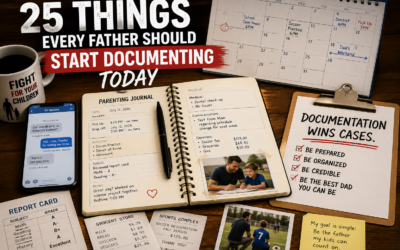
The Best Memory Doesn't Win in Court One of the biggest mistakes fathers make is assuming they'll remember everything when it's time to testify. You won't. Custody cases often take months—or even years—to resolve. By then, the details blur together. Dates get...

What Judges Look for When Deciding Child Custody
It's Not About Who Loves Their Child More One of the biggest misconceptions fathers have is believing custody cases are won by proving who loves their child the most. The truth is… Almost every parent who walks into family court loves their child. Judges already...

How to Choose the Right Family Law Attorney for Your Custody Case
Not All Family Law Attorneys Are the Same One of the biggest mistakes I see fathers make is assuming that every family law attorney has the same experience, skills, and approach. They don't. After spending more than 27 years helping fathers through custody disputes,...

How Judges Decide Child Custody: What Every Father Should Know
Every year, thousands of good fathers lose valuable parenting time—not because they don't love their children, but because they unknowingly make mistakes that hurt their custody case. I've spent more than 27 years helping fathers navigate child custody cases, and I've...

27 Years of Custody Cases: 10 Lessons Every Father Should Know
More than twenty-seven years ago, I began helping fathers who were scared, overwhelmed, and unsure of what to do next. Since then, I've spoken with thousands of dads. Some walked away with equal parenting time. Some earned primary custody. Others lost valuable time...